Porsche Retail Reality in 2025: Pressure, Performance, and a Turning Point
December 21, 2025
Porsche’s Market Reset in 2025: Why Turmoil May Benefit Enthusiasts
February 4, 2026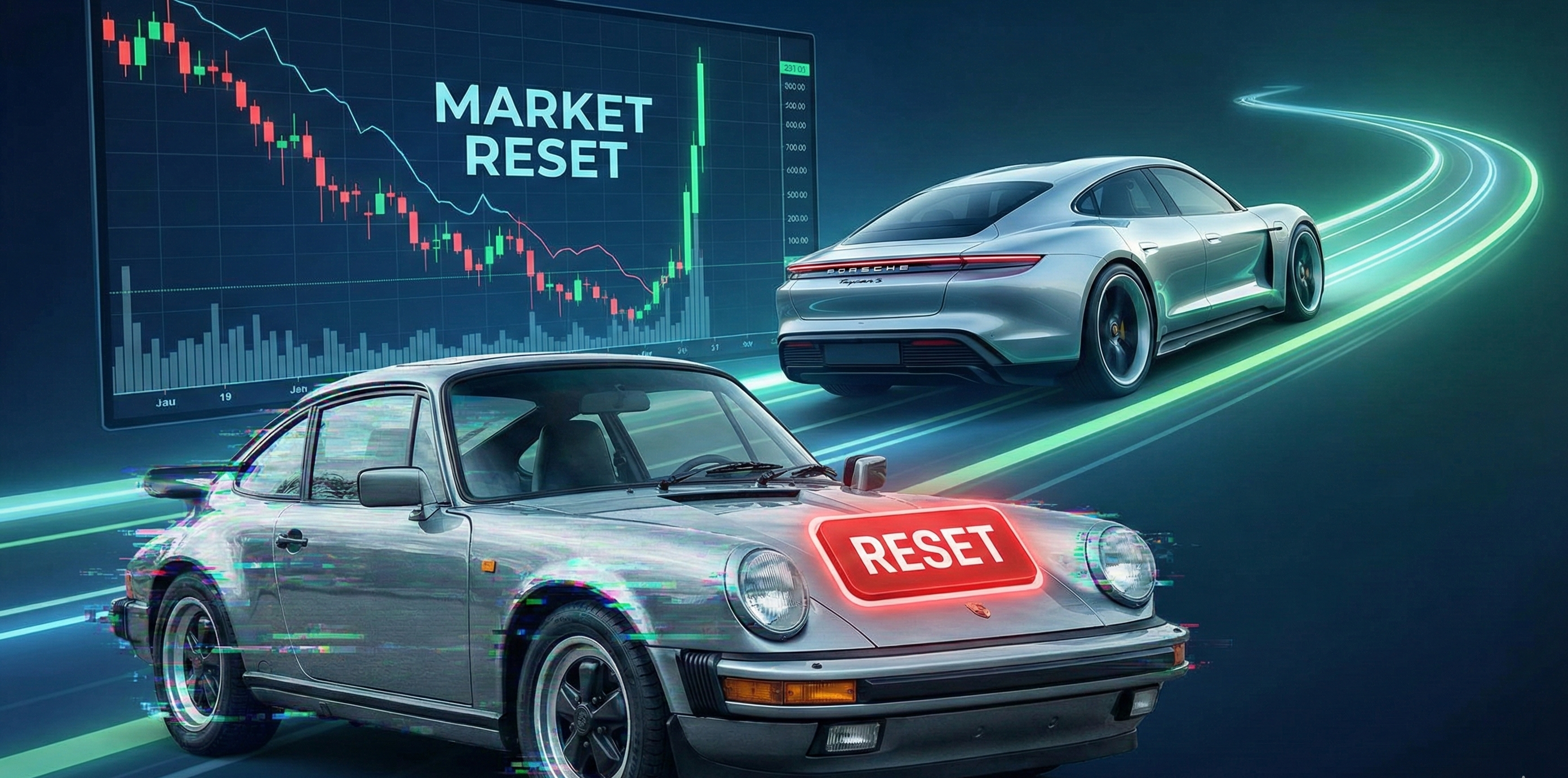
What Is Happening to the Porsche Business Model?
Porsche is facing a structural reset.
Not a cyclical wobble. Not a seasonal slowdown. A fundamental business model challenge.
An internal memo attributed to CEO Oliver Blume made headlines for its candour, stating plainly:
“The business model that has served us for decades no longer works.”
For long-time Porsche watchers, this wasn’t shocking; it was overdue.
Why Falling Profitability Matters More Than Falling Sales
Headline delivery numbers often distract from the more dangerous metric: margin.
- Global deliveries (H1 2026): 146,000 units (down ~6% YoY)
- Revenue decline: ~1.7%
- Profitability decline: ~40%
- Operating margins: ~8%, down from historic 15%+ (source needed)
This is the real alarm bell.
Porsche didn’t build its reputation on volume; it built it on predictable profitability.
Are EV Sales Really a Sign of Success?
One commonly celebrated statistic deserves scrutiny:
~60% of global Porsche sales YTD are Macan EV.
That sounds compelling until context is applied.
Factors distorting EV “demand”:
- Incentivised sales
- No petrol alternative available
- Delayed ICE deliveries
- Production skewed toward EVs
- Reduced 718 output
- Slower Panamera and 911 supply
Conclusion:
EV volume ≠ consumer preference. Confusing the two is what created this situation in the first place.
Where the Market Is Pushing Back: 911 Pricing Resistance
For the first time in modern history, new 911 GTS models are genuinely hard to sell.
Observed trends (UK market):
- Buyer resistance firming, not softening
- £160k–£170k transaction levels
- Delivery-miles cars discounted by ~£20k
This likely marks the psychological ceiling for many buyers.
Meanwhile:
- Used 911s between £50k–£95k continue to transact strongly
- Liquidity remains healthy at “real-world enthusiast money”
A Familiar Moment: Why This Feels Like the 1990s Again
This is not Porsche’s first existential moment.
In the mid-1990s, bankruptcy loomed until a strategic reset:
- Fewer models.
- Clear hierarchy.
- Porsche Boxster as an accessible entry point.
- The Porsche 911 is the aspirational halo.
Today’s challenge is different, but the solution rhymes.
Why Production Cuts Are the Right Move
Porsche plans to reduce global output from ~311,000 to ~250,000 units.
This matters because:
- Exclusivity protects residuals
- Predictability builds buyer confidence
- Over-volume destroys brand trust
Unpredictable values are kryptonite to Porsche ownership.
What Porsche Owners Actually Want Back
From years of transactional data and buyer conversations:
- Engineering superiority
→ Fewer recalls, greater reliability than BMW, Mercedes, Audi - Less weight, less tech clutter
→ Lighter cars, fewer nanny systems - Clear model hierarchy
→ Not everything needs to be a “flagship.” - Predictable residual values
→ Stability beats speculative upside
Key Takeaways
- Porsche’s challenge is structural, not cyclical
- EV strategy masked real demand signals
- Pricing elasticity is tightening, even for 911s
- Used Porsche demand remains robust below £100k
- Recovery depends on fewer cars, a clearer identity, and trust
FAQ: Porsche Market Outlook
Is Porsche in financial trouble?
Not existentially, but its historic margin model is under pressure.
Are EV Porsches failing?
Not failing, but sales data is distorted by incentives and a lack of ICE alternatives.
Is now a bad time to buy a 911?
New buyers should be price-sensitive; used buyers are well-positioned.
Will Porsche cut production further?
Production reduction is likely ongoing if exclusivity is prioritised.
Are residual values at risk?
Only where supply exceeds genuine demand, halo models remain safest.